Defines universal mathematical and physical constants. More...
Namespaces | |
| namespace | detail |
Classes | |
| class | Vector3 |
| A lightweight, constexpr, stack-based 3D vector. More... | |
| class | Vector3< double > |
| SIMD-optimized specialization of Vector3 for double. More... | |
| class | Vector3< float > |
| SIMD-optimized specialization of Vector3 for float. More... | |
| class | Matrix3 |
| A lightweight, constexpr, stack-based 3x3 matrix. More... | |
| struct | PositionBlockT |
| Represents a Structure of Arrays (SoA) block of atom positions for SIMD processing. More... | |
| struct | Point3T |
| Lightweight POD for passing 3D coordinates to scalar SIMD helpers. More... | |
| struct | SincIntegralParams |
| Parameter container for sincIntegral kernel invocations. More... | |
| struct | RDFNormalizationParams |
| Parameter container for normalizeRdfBins kernel invocations. More... | |
| struct | ScaleBinsParams |
| Parameter container for scaleBins kernel invocations. More... | |
| struct | MillerPhaseSumParams |
| Parameter container for millerPhaseSum kernel invocations. More... | |
| struct | MillerExpSumParams |
| Parameter container for millerExpSum / complexExpSum kernel invocations. More... | |
| struct | ComplexExpSumResult |
| Output result container holding cosine and sine phase sums. More... | |
| struct | FillPositionBlockParams |
| Parameter container for fillPositionBlock kernel invocations. More... | |
| struct | KernelGenerationParams |
| Parameters for kernel generation. More... | |
| struct | KernelSmoothingParams |
| Options bundling for data series kernel smoothing. More... | |
| struct | LegendreParams |
| Parameters for Legendre polynomial evaluation (degree and order). More... | |
Typedefs | |
| using | Vector3R = Vector3<real_t> |
| Precision-configurable aliases for 3D vectors and 3x3 matrices. | |
| using | Matrix3R = Matrix3<real_t> |
| using | PositionBlock = PositionBlockT<real_t> |
| Backward-compatible type alias for default real_t precision PositionBlock. | |
| using | Point3 = Point3T<real_t> |
| Backward-compatible type alias for default real_t precision Point3. | |
| template<typename T = real_t> | |
| using | ComplexExpSumParams = MillerExpSumParams<T> |
| Alias for MillerExpSumParams used with complexExpSum kernel invocations. | |
| template<typename T = real_t> | |
| using | PhaseSumResult = ComplexExpSumResult<T> |
| Alias for PhaseSumResult used with phase sum kernel invocations. | |
| template<typename T = real_t> | |
| using | MillerPhaseSumResult = ComplexExpSumResult<T> |
| Alias for MillerPhaseSumResult used with millerPhaseSum kernel invocations. | |
Enumerations | |
| enum class | KernelType : std::uint8_t { Gaussian , Bump , Triweight , Epanechnikov , Cosine , Biweight } |
| Selection of kernel types for smoothing. More... | |
Functions | |
| bool | isGoodFFTSize (size_t n) |
| Helper to check if a size is a product of small prime factors (2, 3, 5). Highly optimized for FFTW3 and MKL. | |
| size_t | findNextGoodFFTSize (size_t target) |
| Finds the next "good" FFT size >= target. | |
| template<typename T = double> | |
| void | computeFFT (std::vector< std::complex< T > > &data, bool invert) |
| Simple Radix-2 Cooley-Tukey FFT implementation with bit-reversal optimization. | |
| template<typename T = real_t> | |
| std::vector< T > | autocorrelate (const std::vector< T > &signal, std::vector< std::complex< T > > &workspace) |
| Computes the autocorrelation of a 1D real sequence using FFT. | |
| template<typename T = real_t> | |
| std::vector< T > | autocorrelate (const std::vector< T > &signal) |
| Convenience overload — allocates its own workspace. | |
| template<typename T> | |
| constexpr T | dot (const Vector3< T > &vec_a, const Vector3< T > &vec_b) noexcept |
| Computes the dot product of two vectors. | |
| template<typename T> | |
| constexpr Vector3< T > | cross (const Vector3< T > &vec_a, const Vector3< T > &vec_b) noexcept |
| Computes the cross product of two 3D vectors. | |
| Vector3< double > | cross (const Vector3< double > &vec_a, const Vector3< double > &vec_b) noexcept |
| Computes the cross product of two 3D vectors. | |
| template<typename T> | |
| constexpr T | normSq (const Vector3< T > &vec_a) noexcept |
| Computes the squared vector norm (length). | |
| template<typename T> | |
| constexpr T | norm (const Vector3< T > &vec_a) noexcept |
| Computes the vector norm (length). | |
| template<typename T> | |
| constexpr T | distance (const Vector3< T > &vec_a, const Vector3< T > &vec_b) noexcept |
| Computes the distance between two vectors. | |
| template<typename T> | |
| constexpr Vector3< T > | normalize (const Vector3< T > &vec_a) |
| Normalizes the given vector. | |
| template<typename T> | |
| constexpr T | determinant (const Matrix3< T > &matrix) noexcept |
| Computes the determinant of a 3x3 matrix. | |
| template<typename T> | |
| constexpr Matrix3< T > | invert (const Matrix3< T > &matrix) |
| Computes the inverse of a 3x3 matrix. | |
| template<typename T> | |
| constexpr Matrix3< T > | transpose (const Matrix3< T > &matrix) noexcept |
| Computes the transpose of a 3x3 matrix. | |
| template<typename T, typename U> | |
| constexpr auto | operator* (const Matrix3< T > &matrix, const Vector3< U > &vector) noexcept |
| Matrix-vector multiplication. | |
| template<typename T> | |
| constexpr Matrix3< T > | operator* (const Matrix3< T > &mat_a, const Matrix3< T > &mat_b) noexcept |
| Matrix-matrix multiplication. | |
| template<typename Scalar, typename T> requires std::is_arithmetic_v<Scalar> | |
| constexpr Vector3< T > | operator* (Scalar scalar, const Vector3< T > &vec) noexcept |
| Scalar-vector multiplication. | |
| template<typename T> | |
| void | computeDsqBlock (T ref_x, T ref_y, T ref_z, const PositionBlockT< T > &block, T *out_dsq) noexcept |
| Computes squared distances from a reference point to a SoA block of positions. | |
| template<typename AtomRange, typename T = real_t> | |
| std::size_t | fillPositionBlock (const FillPositionBlockParams< AtomRange, T > ¶ms) noexcept |
| Populates vectors with standard atom block positions for SIMD. | |
| template<typename T> | |
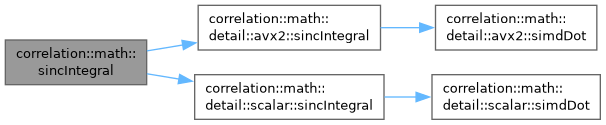
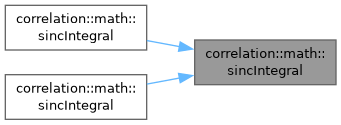
| T | sincIntegral (const SincIntegralParams< T > ¶ms) noexcept |
| Computes a sinc-weighted integral over a range. | |
| double | sincIntegral (double q_magnitude, const double *integrand, const double *radial_bins, double *sinqr_scratch, std::size_t count) noexcept |
| Computes a sinc-weighted integral for double precision (backward compatibility). | |
| float | sincIntegral (float q_magnitude, const float *integrand, const float *radial_bins, float *sinqr_scratch, std::size_t count) noexcept |
| Computes a sinc-weighted integral for single precision (backward compatibility). | |
| template<typename T> | |
| void | normalizeRdfBins (const RDFNormalizationParams< T > ¶ms) noexcept |
| Normalizes Radial Distribution Function (RDF) bins. | |
| template<typename T> | |
| void | scaleBins (const ScaleBinsParams< T > ¶ms) noexcept |
| Scales an array by a constant factor in-place using ScaleBinsParams container. | |
| template<typename T> | |
| void | scaleBins (T *arr, T scale_factor, std::size_t count) noexcept |
| Scales an array by a constant factor in-place. | |
| template<typename T> | |
| T | simdDot (const T *input_a, const T *input_b, std::size_t count) noexcept |
| Computes the dot product of two array buffers. | |
| template<typename T> | |
| void | dotBlock (T v1x, T v1y, T v1z, const T *v2x, const T *v2y, const T *v2z, T *out_dot, std::size_t count) noexcept |
| Computes dot products between a reference vector and a block of target vectors. | |
| template<typename T> | |
| T | debyeSum (T q_magnitude, const T *distances, T *scratch, std::size_t count) noexcept |
| Computes the Debye scattering equation sum across distances. | |
| template<typename T> | |
| void | complexExpSum (T q_x, T q_y, T q_z, const T *x_s, const T *y_s, const T *z_s, std::size_t count, ComplexExpSumResult< T > &result) noexcept |
| Computes the sum of complex exponentials for a query q-vector. | |
| template<typename T> | |
| void | complexExpSum (const ComplexExpSumParams< T > ¶ms, ComplexExpSumResult< T > &result) noexcept |
| template<typename T = real_t> | |
| ComplexExpSumResult< T > | complexExpSum (T q_x, T q_y, T q_z, const T *x_s, const T *y_s, const T *z_s, std::size_t count) noexcept |
| template<typename T = real_t> | |
| ComplexExpSumResult< T > | complexExpSum (const MillerExpSumParams< T > ¶ms) noexcept |
| template<typename T> | |
| void | millerPhaseSum (const MillerPhaseSumParams< T > ¶ms, MillerPhaseSumResult< T > &result) noexcept |
| Computes the Miller phase sum across angle blocks. | |
| template<typename T = real_t> | |
| MillerPhaseSumResult< T > | millerPhaseSum (const MillerPhaseSumParams< T > ¶ms) noexcept |
| template<typename T> | |
| void | millerPhaseSum (const T *cos1, const T *sin1, const T *cos2, const T *sin2, const T *cos3, const T *sin3, std::size_t count, MillerPhaseSumResult< T > &result) noexcept |
| template<typename T = real_t> | |
| MillerPhaseSumResult< T > | millerPhaseSum (const T *cos1, const T *sin1, const T *cos2, const T *sin2, const T *cos3, const T *sin3, std::size_t count) noexcept |
| template<typename T> | |
| T | distSqScalar (Point3T< T > point_a, Point3T< T > point_b) noexcept |
| Computes the squared distance between two 3D points. | |
| real_t | distSqScalar (Point3 point_a, Point3 point_b) noexcept |
| Non-templated overload of distSqScalar for backward compatibility. | |
| const char * | simdLevelString () noexcept |
| Returns a string describing the compiled SIMD instruction set level. | |
| std::vector< real_t > | generateKernel (const KernelGenerationParams ¶ms) |
| Generates a smoothing kernel. | |
| std::vector< real_t > | kernelSmoothing (const std::vector< real_t > &y_values, KernelSmoothingParams params) |
| Applies kernel smoothing to a data series. | |
| std::vector< real_t > | kernelSmoothing (const std::vector< real_t > &r_values, const std::vector< real_t > &y_values, KernelSmoothingParams params) |
| Grid overload: derives bin_width from the independent variable grid. | |
| real_t | factorial (int n) |
| Inline helper for factorials up to 20. Beyond 20, the values exceed the capacity of a 64-bit integer, so we return real_t for consistency. | |
| real_t | sphLegendre (LegendreParams params, real_t theta) |
| Computes the spherical associated Legendre polynomial corresponding to std::sph_legendre from C++17. | |
| void | sphLegendreBatch (LegendreParams params, const real_t *theta, real_t *results, size_t count) |
| Vectorized version of sphLegendre. Computes the polynomial for a range of angles. | |
Variables | |
| constexpr real_t | PI |
| High-precision mathematical pi constant. | |
| constexpr real_t | RAD_TO_DEG |
| Conversion factor: Radians to Degrees. | |
| constexpr real_t | DEG_TO_RAD |
| Conversion factor: Degrees to Radians. | |
| constexpr real_t | THZ_TO_CMINV = static_cast<real_t>(33.35641) |
| Conversion factor: THz to cm^-1. | |
| constexpr real_t | THZ_TO_MEV = static_cast<real_t>(4.135667) |
| Conversion factor: THz to meV. | |
| constexpr real_t | BOHR_TO_ANGSTROM |
| Conversion factor: Bohr to Angstroms. | |
| constexpr real_t | ANGSTROM_TO_BOHR |
| Conversion factor: Angstroms to Bohr. | |
| constexpr real_t | TWO_PI = static_cast<real_t>(2.0) * PI |
| 2 * PI | |
| constexpr real_t | FOUR_PI = static_cast<real_t>(4.0) * PI |
| 4 * PI | |
| constexpr real_t | KB_EV_PER_K = static_cast<real_t>(8.617333262e-5) |
| Boltzmann constant in eV/K. | |
| constexpr real_t | HBAR_EV_PS |
| Reduced Planck constant in eV*ps. | |
| constexpr real_t | MAX_CUTOFF_RADIUS |
| Maximum allowable cutoff radius in Angstroms. | |
Detailed Description
Defines universal mathematical and physical constants.
Typedef Documentation
◆ ComplexExpSumParams
| using correlation::math::ComplexExpSumParams = MillerExpSumParams<T> |
Alias for MillerExpSumParams used with complexExpSum kernel invocations.
◆ Matrix3R
| using correlation::math::Matrix3R = Matrix3<real_t> |
◆ MillerPhaseSumResult
| using correlation::math::MillerPhaseSumResult = ComplexExpSumResult<T> |
Alias for MillerPhaseSumResult used with millerPhaseSum kernel invocations.
◆ PhaseSumResult
| using correlation::math::PhaseSumResult = ComplexExpSumResult<T> |
Alias for PhaseSumResult used with phase sum kernel invocations.
◆ Point3
| using correlation::math::Point3 = Point3T<real_t> |
◆ PositionBlock
Backward-compatible type alias for default real_t precision PositionBlock.
◆ Vector3R
| using correlation::math::Vector3R = Vector3<real_t> |
Precision-configurable aliases for 3D vectors and 3x3 matrices.
Enumeration Type Documentation
◆ KernelType
|
strong |
Function Documentation
◆ autocorrelate() [1/2]
|
inlinenodiscard |
Convenience overload — allocates its own workspace.
Prefer the two-argument overload in tight loops to recycle the allocation.
- Parameters
-
signal Input signal vector.
- Returns
- The autocorrelation vector.

◆ autocorrelate() [2/2]
|
inlinenodiscard |
Computes the autocorrelation of a 1D real sequence using FFT.
- Parameters
-
signal Input signal. workspace Reusable scratch buffer. Resized automatically when needed. Pass the same buffer across repeated calls (e.g. per-atom loops) to avoid repeated heap allocation.
- Returns
- Autocorrelation sequence of length N equal to signal.size().


◆ complexExpSum() [1/4]
|
inlinenoexcept |

◆ complexExpSum() [2/4]
|
inlinenoexcept |

◆ complexExpSum() [3/4]
|
inlinenoexcept |

◆ complexExpSum() [4/4]
|
inlinenoexcept |
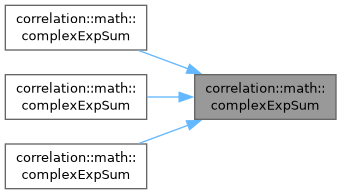
Computes the sum of complex exponentials for a query q-vector.
- Template Parameters
-
T Coordinate scalar type (float or double).
◆ computeDsqBlock()
|
inlinenoexcept |
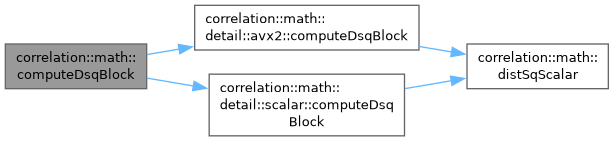
Computes squared distances from a reference point to a SoA block of positions.
- Template Parameters
-
T Floating-point coordinate type (float or double).

◆ computeFFT()
|
inline |
Simple Radix-2 Cooley-Tukey FFT implementation with bit-reversal optimization.
- Parameters
-
data The input/output vector of complex numbers. Modifies in-place. invert If true, performs an inverse FFT and scales the result by 1/N.


◆ cross() [1/2]
|
inlinenodiscardnoexcept |
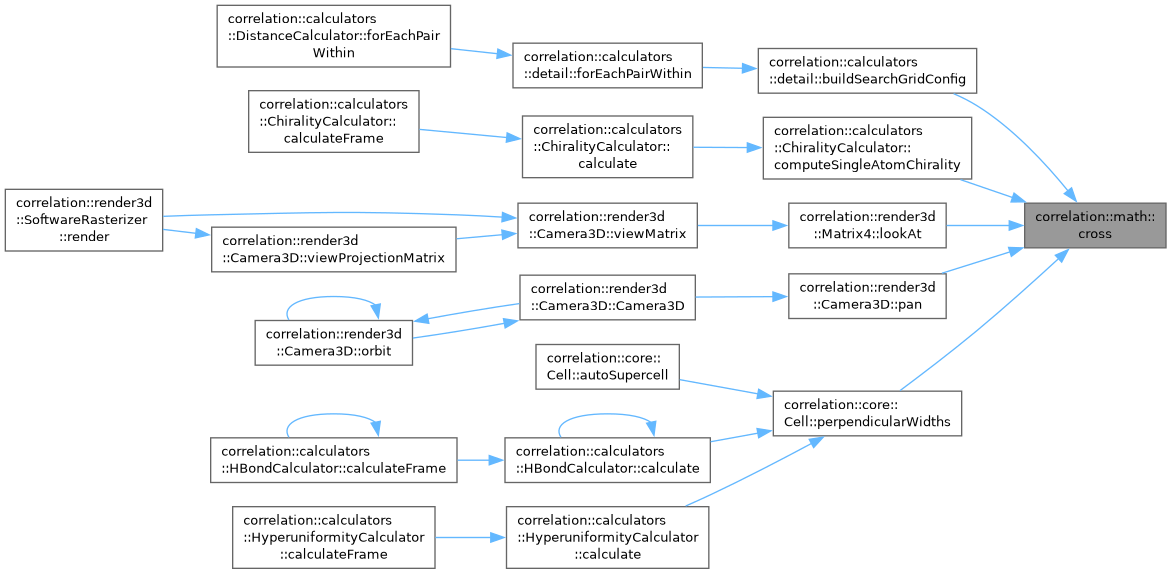
Computes the cross product of two 3D vectors.
Optimized specialization for double using manual calculations to help the compiler generate aligned SIMD code.
- Parameters
-
vec_a The first vector. vec_b The second vector.
- Returns
- A new Vector3 representing the cross product vec_a x vec_b.
◆ cross() [2/2]
|
nodiscardconstexprnoexcept |
Computes the cross product of two 3D vectors.
- Parameters
-
vec_a The first vector. vec_b The second vector.
- Returns
- A new Vector3 representing the cross product vec_a x vec_b.
◆ debyeSum()
|
inlinenoexcept |
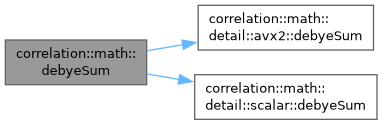
Computes the Debye scattering equation sum across distances.
- Template Parameters
-
T Floating-point precision (float or double).
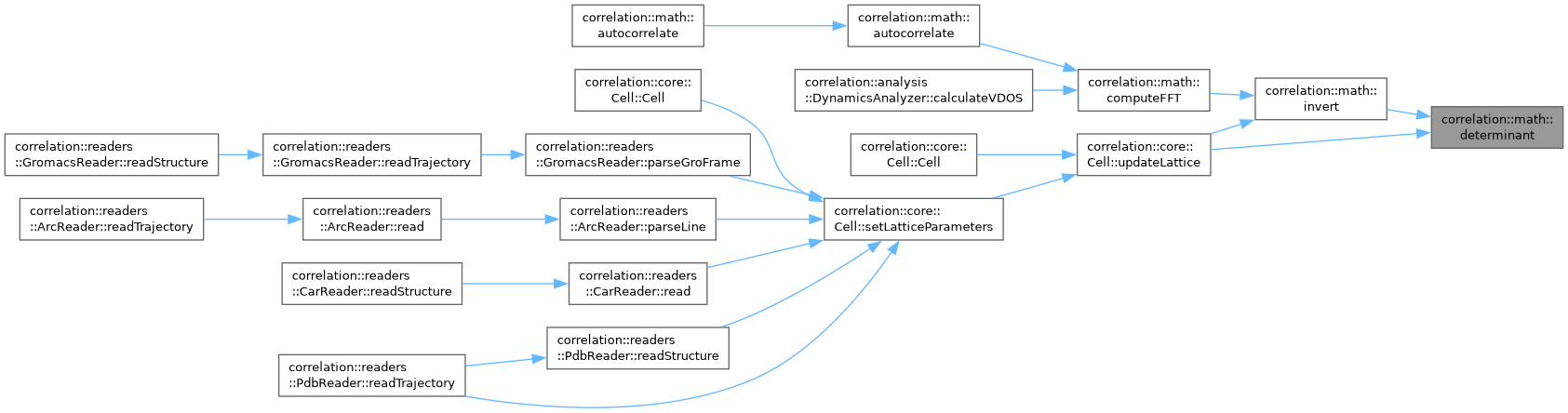
◆ determinant()
|
nodiscardconstexprnoexcept |
Computes the determinant of a 3x3 matrix.
- Parameters
-
matrix The matrix.
- Returns
- The determinant.
◆ distance()
|
nodiscardconstexprnoexcept |
Computes the distance between two vectors.
- Parameters
-
vec_a The first vector. vec_b The second vector.
- Returns
- The Euclidean distance between vec_a and vec_b.


◆ distSqScalar() [1/2]
Non-templated overload of distSqScalar for backward compatibility.
- Parameters
-
[in] point_a The first point. [in] point_b The second point.
- Returns
- The scalar squared distance using real_t.

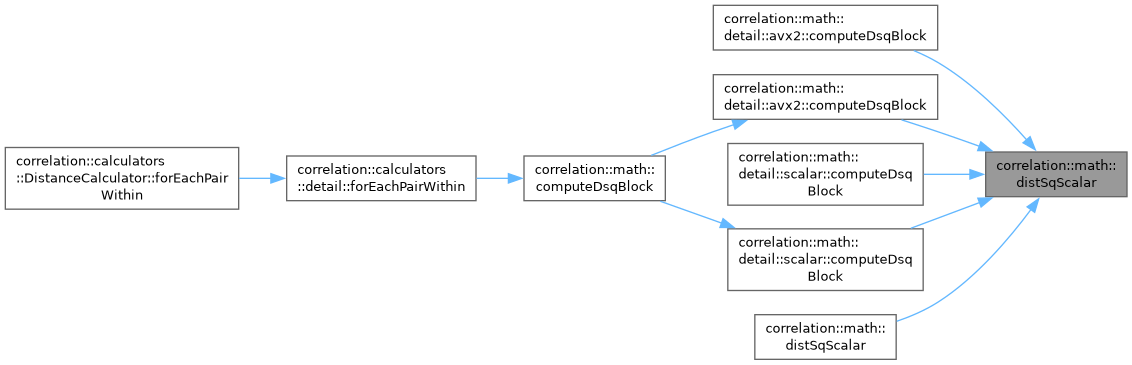
◆ distSqScalar() [2/2]
|
inlinenodiscardnoexcept |
Computes the squared distance between two 3D points.
- Template Parameters
-
T Floating point coordinate type.
- Parameters
-
[in] point_a The first point. [in] point_b The second point.
- Returns
- The scalar squared distance.
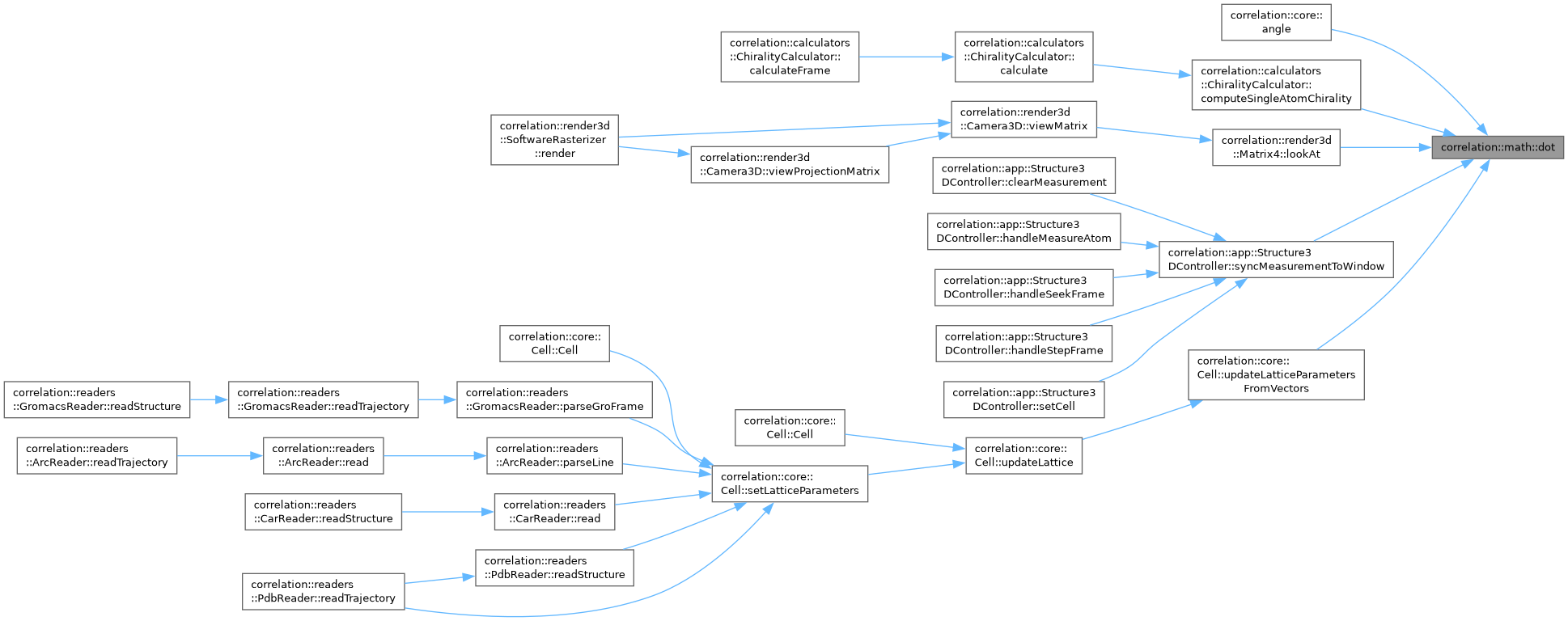
◆ dot()
|
nodiscardconstexprnoexcept |
Computes the dot product of two vectors.
- Parameters
-
vec_a The first vector. vec_b The second vector.
- Returns
- The scalar dot product.
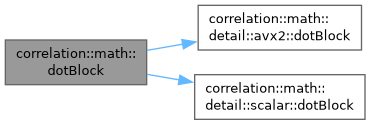
◆ dotBlock()
|
inlinenoexcept |
Computes dot products between a reference vector and a block of target vectors.
- Template Parameters
-
T Floating-point precision (float or double).
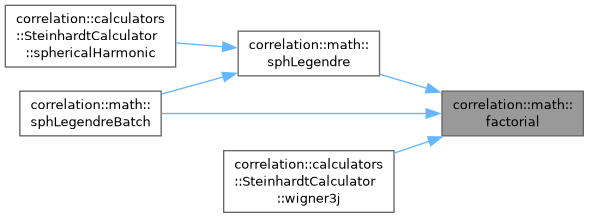
◆ factorial()
|
inline |
Inline helper for factorials up to 20. Beyond 20, the values exceed the capacity of a 64-bit integer, so we return real_t for consistency.
- Parameters
-
n the number to compute factorial for.
- Returns
- The factorial of n.
◆ fillPositionBlock()
|
inlinenoexcept |
Populates vectors with standard atom block positions for SIMD.
- Template Parameters
-
AtomRange A range of atom objects (e.g., std::vector<Atom>). T Coordinate scalar type (defaults to real_t).
◆ findNextGoodFFTSize()
|
inlinenodiscard |
Finds the next "good" FFT size >= target.


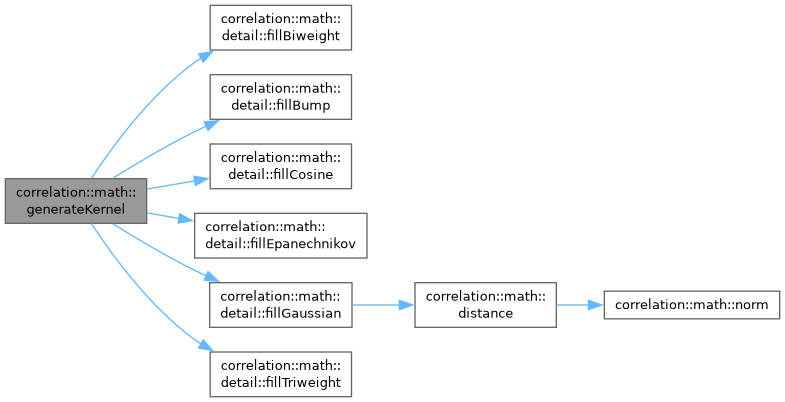
◆ generateKernel()
|
inlinenodiscard |
Generates a smoothing kernel.
- Parameters
-
params The parameters for kernel generation.
- Returns
- A vector containing the normalized kernel.

◆ invert()
|
nodiscardconstexpr |
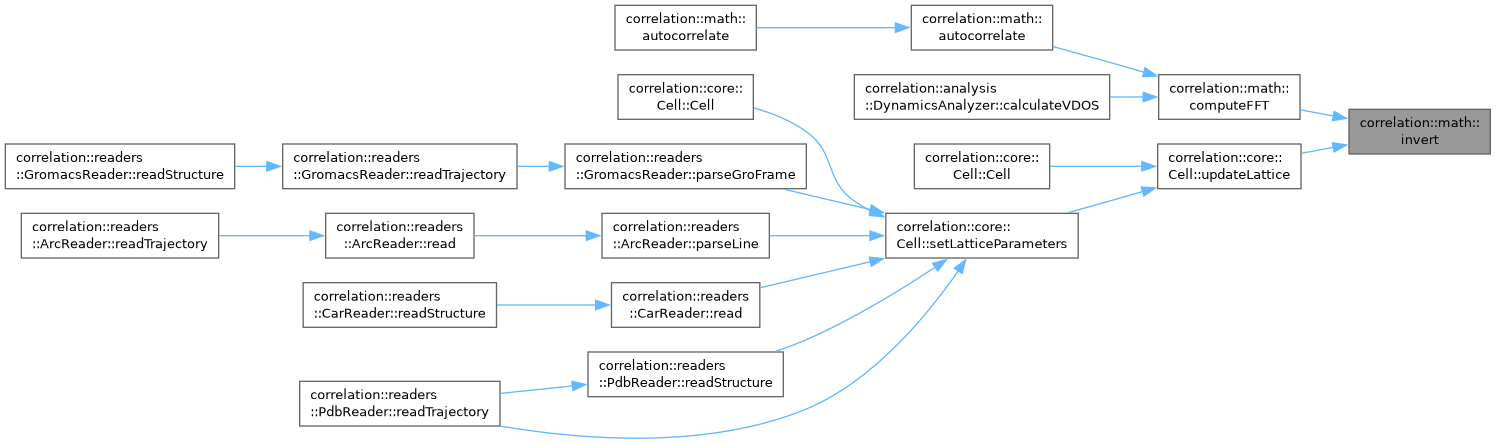
Computes the inverse of a 3x3 matrix.
- Parameters
-
matrix The matrix to invert.
- Returns
- The inverted matrix.
- Exceptions
-
std::runtime_error if the matrix is singular (determinant near zero).

◆ isGoodFFTSize()
|
inlinenodiscard |
Helper to check if a size is a product of small prime factors (2, 3, 5). Highly optimized for FFTW3 and MKL.

◆ kernelSmoothing() [1/2]
|
inline |
Grid overload: derives bin_width from the independent variable grid.
- Parameters
-
r_values The independent variable grid (e.g., radial distances). y_values The dependent variable values to be smoothed. params Kernel smoothing configuration parameters.
- Returns
- A vector containing the smoothed data.
◆ kernelSmoothing() [2/2]
|
inline |
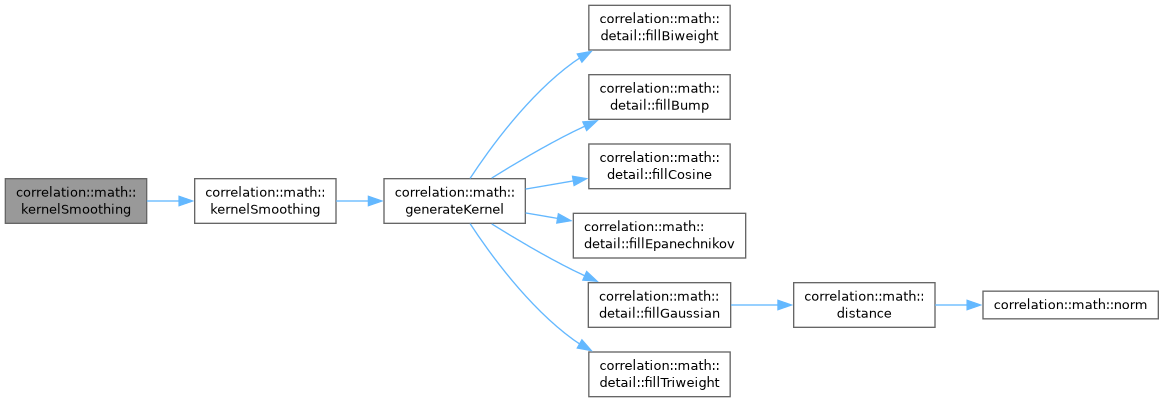
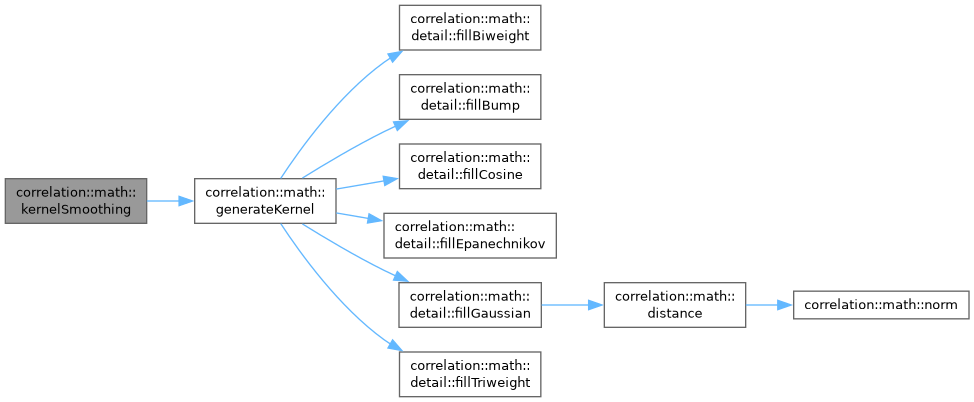
Applies kernel smoothing to a data series.
This function convolves the chosen kernel with y_values to produce a smoothed version. The bin width in params characterises the sampling grid.
- Parameters
-
y_values The dependent variable values to be smoothed. params Kernel smoothing configuration parameters.
- Returns
- A vector containing the smoothed data (same length as y_values).

◆ millerPhaseSum() [1/4]
|
inlinenoexcept |
◆ millerPhaseSum() [2/4]
|
inlinenoexcept |
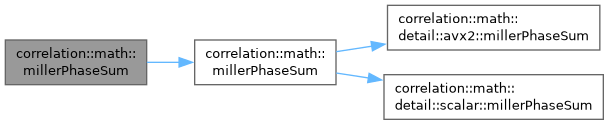
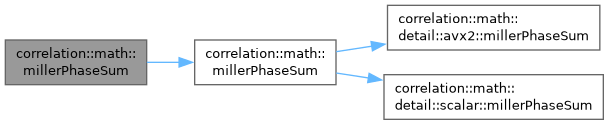
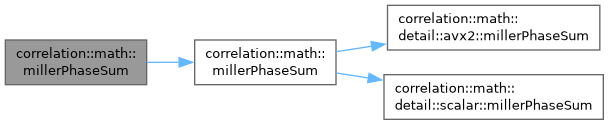
Computes the Miller phase sum across angle blocks.
- Template Parameters
-
T Floating-point precision (float or double).
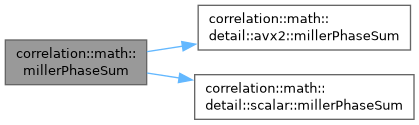
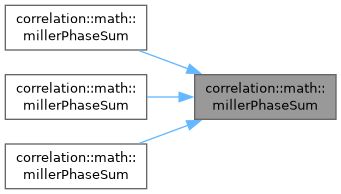
◆ millerPhaseSum() [3/4]
|
inlinenoexcept |
◆ millerPhaseSum() [4/4]
|
inlinenoexcept |
◆ norm()
|
nodiscardconstexprnoexcept |
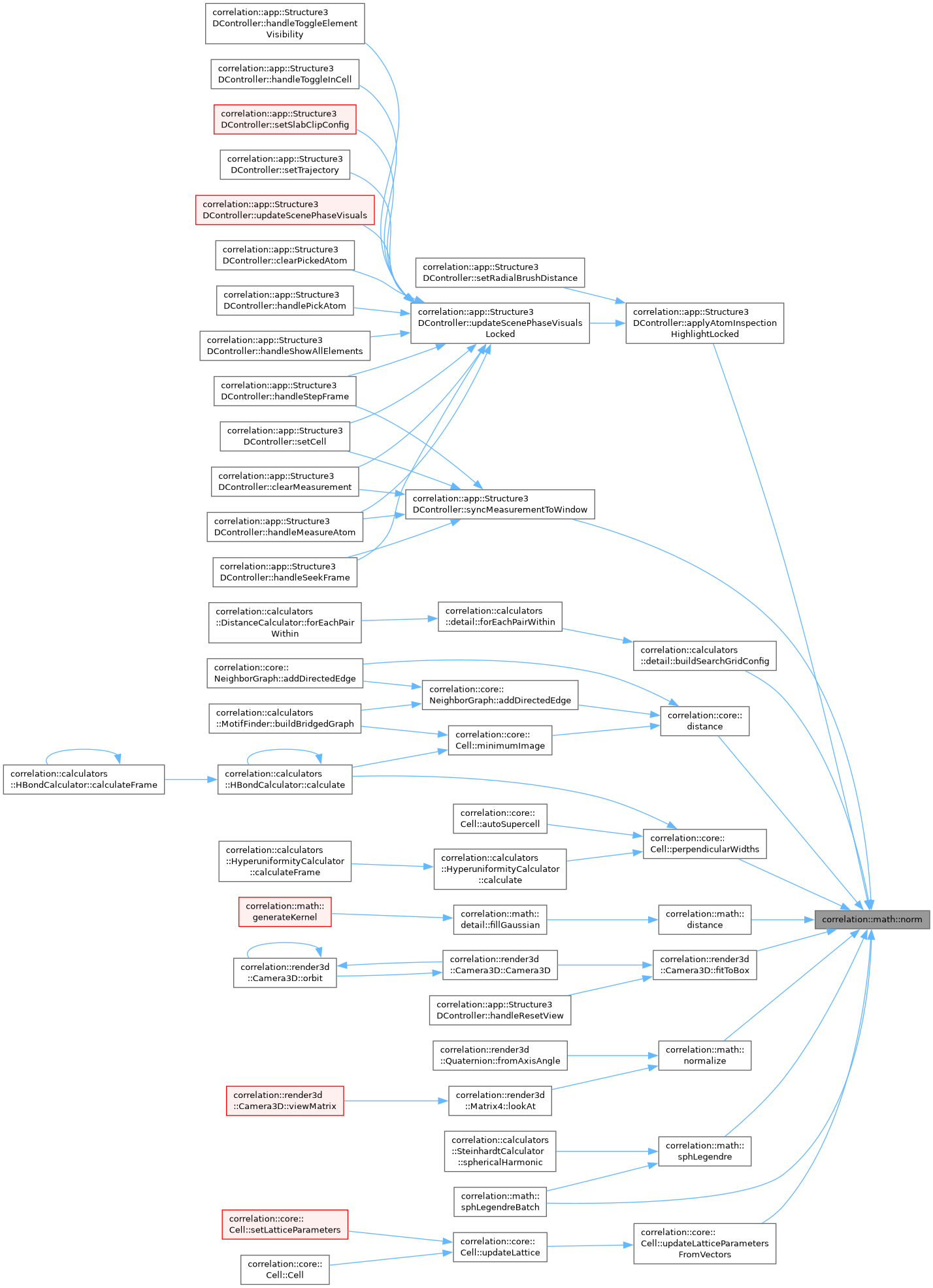
Computes the vector norm (length).
- Parameters
-
vec_a The vector.
- Returns
- The length of the vector.
◆ normalize()
|
nodiscardconstexpr |
Normalizes the given vector.
- Parameters
-
vec_a The vector to normalize.
- Returns
- A normalized copy of the vector.
- Exceptions
-
std::domain_error if the vector length is too close to zero.


◆ normalizeRdfBins()
|
inlinenoexcept |
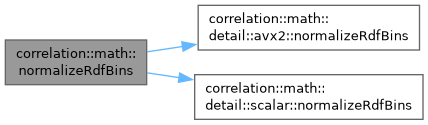
Normalizes Radial Distribution Function (RDF) bins.
- Template Parameters
-
T Floating-point precision (float or double).
◆ normSq()
|
nodiscardconstexprnoexcept |
Computes the squared vector norm (length).
- Parameters
-
vec_a The vector.
- Returns
- The squared length of the vector.

◆ operator*() [1/3]
|
nodiscardconstexprnoexcept |
Matrix-matrix multiplication.
- Template Parameters
-
T Scalar type.
- Parameters
-
mat_a Left matrix. mat_b Right matrix.
- Returns
- Resulting matrix product mat_a * mat_b.
◆ operator*() [2/3]
|
nodiscardconstexprnoexcept |
Matrix-vector multiplication.
- Template Parameters
-
T Coordinate type.
- Parameters
-
matrix 3x3 matrix. vector 3D vector.
- Returns
- Transformed vector matrix * vector.
◆ operator*() [3/3]
requires std::is_arithmetic_v<Scalar>
|
nodiscardconstexprnoexcept |
Scalar-vector multiplication.
- Template Parameters
-
Scalar Arithmetic type. T Vector coordinate type.
- Parameters
-
scalar Scaling factor. vec Input vector.
- Returns
- Scaled vector scalar * vec.
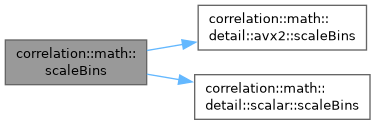
◆ scaleBins() [1/2]
|
inlinenoexcept |
Scales an array by a constant factor in-place using ScaleBinsParams container.
- Template Parameters
-
T Floating-point precision (float or double).

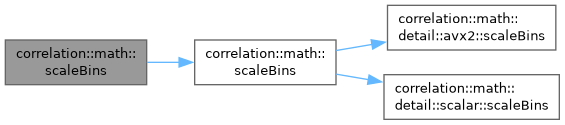
◆ scaleBins() [2/2]
|
inlinenoexcept |
Scales an array by a constant factor in-place.
- Template Parameters
-
T Floating-point precision (float or double).
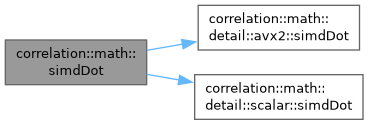
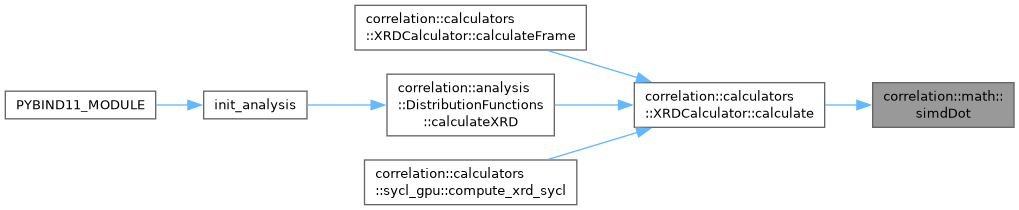
◆ simdDot()
|
inlinenoexcept |
Computes the dot product of two array buffers.
- Template Parameters
-
T Floating-point precision (float or double).
◆ simdLevelString()
|
inlinenodiscardnoexcept |
Returns a string describing the compiled SIMD instruction set level.
- Returns
- String representation of the SIMD level ("AVX-512", "AVX2", or "Scalar").
◆ sincIntegral() [1/3]
|
inlinenoexcept |
Computes a sinc-weighted integral over a range.
- Template Parameters
-
T Floating-point precision (float or double).
◆ sincIntegral() [2/3]
|
inlinenoexcept |
Computes a sinc-weighted integral for double precision (backward compatibility).

◆ sincIntegral() [3/3]
|
inlinenoexcept |
Computes a sinc-weighted integral for single precision (backward compatibility).

◆ sphLegendre()
|
inline |
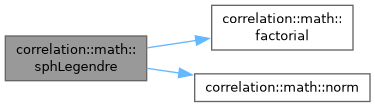
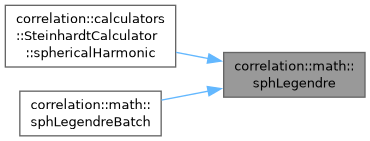
Computes the spherical associated Legendre polynomial corresponding to std::sph_legendre from C++17.
Specifically, computes Y_l^m(theta, 0) without the Condon-Shortley phase.
- Parameters
-
params Degree and order parameters. theta The colatitudinal angle in radians.
- Returns
- The evaluated spherical Legendre polynomial.
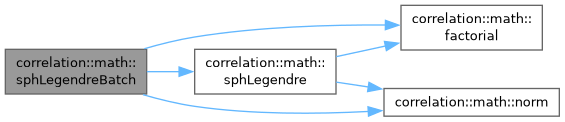
◆ sphLegendreBatch()
|
inline |
Vectorized version of sphLegendre. Computes the polynomial for a range of angles.
- Parameters
-
params Degree and order parameters. theta Array of colatitudinal angles. results Output array where computed polynomials will be stored. count Number of angles to process.
◆ transpose()
|
nodiscardconstexprnoexcept |
Computes the transpose of a 3x3 matrix.
- Parameters
-
matrix The matrix to transpose.
- Returns
- The transposed matrix.
Variable Documentation
◆ ANGSTROM_TO_BOHR
|
constexpr |
Conversion factor: Angstroms to Bohr.
◆ BOHR_TO_ANGSTROM
|
constexpr |
Conversion factor: Bohr to Angstroms.
◆ DEG_TO_RAD
|
constexpr |
Conversion factor: Degrees to Radians.
◆ FOUR_PI
◆ HBAR_EV_PS
|
constexpr |
Reduced Planck constant in eV*ps.
◆ KB_EV_PER_K
Boltzmann constant in eV/K.
◆ MAX_CUTOFF_RADIUS
|
constexpr |
Maximum allowable cutoff radius in Angstroms.
◆ PI
|
constexpr |
High-precision mathematical pi constant.
◆ RAD_TO_DEG
|
constexpr |
◆ THZ_TO_CMINV
Conversion factor: THz to cm^-1.
◆ THZ_TO_MEV
Conversion factor: THz to meV.